
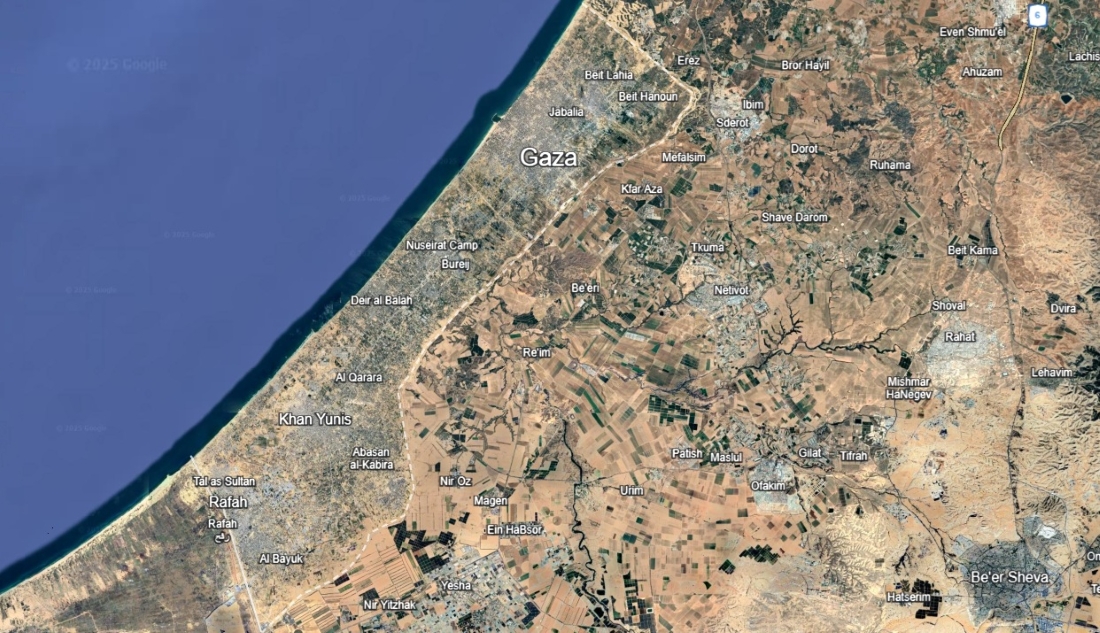
There is a high likelihood that Israel could annex parts of Gaza
It is challenging to discern Israel’s intentions for Gaza since official statements, actions, and internal politics frequently send mixed messages. Recent reports suggest various possibilities, but without clear public policy, much of the analysis remains speculative.
Official Statements and Stated Goals
Israel’s publicly stated objectives in Gaza, particularly since the escalation of conflict following Hamas’s October 7, 2023 attack, have centered on two primary goals:
- Eliminating Hamas’s governance and military capabilities: Israeli leadership, including Prime Minister Benjamin Netanyahu, has repeatedly emphasized the need to dismantle Hamas’s control over Gaza to ensure Israeli security.
- Securing the release of hostages: Israel has prioritized negotiations or military pressure to free hostages taken during the 2023 attack.
Netanyahu has explicitly rejected the idea of permanent occupation or widespread civilian displacement as official policy, stating in 2024 that “Israel has no intention of permanently occupying Gaza or displacing its civilian population.” However, these statements contrast with actions and rhetoric from other government officials and coalition members, particularly from far-right factions, which suggest alternative intentions.
Evidence of Annexation Intentions
There is growing evidence, primarily from Israeli media and international reports, that segments of Israel’s government, particularly far-right coalition members, are pushing for annexation and resettlement of Gaza. Key points include:
- Far-Right Advocacy for Annexation and Resettlement:
- Finance Minister Bezalel Smotrich, a key figure in the Religious Zionism party, has openly advocated for reestablishing Jewish settlements in Gaza, describing it as “an inseparable part of the Land of Israel” and a “realistic” option. At a conference in July 2025, he suggested that Gaza should be “totally destroyed” and its population left “despairing,” potentially encouraging emigration.
- Other far-right figures, like National Security Minister Itamar Ben-Gvir and Settlement Minister Orit Strock, have echoed calls for reoccupying Gaza and establishing settlements, framing it as a return to pre-2005 conditions when Israel withdrew from Gaza.
- A group of 22 cabinet ministers and coalition lawmakers in July 2025 requested a tour of northern Gaza to explore potential settlement sites, indicating active interest in reestablishing a Jewish presence.
- Military Actions and Buffer Zones:
- Israel’s military operations, particularly in northern Gaza, have raised concerns about de facto annexation. For instance, Brigadier General Itzik Cohen’s 2024 comments about “complete evacuation” of northern Gaza’s cities (Jabaliya, Beit Hanoun, and Beit Lahiya) and preventing residents’ return were interpreted as signaling ethnic cleansing and preparation for annexation, though the Israeli military later claimed the remarks were taken out of context.
- The establishment of a Netzarim Corridor, a land corridor splitting Gaza, and expanded buffer zones along Gaza’s borders (encompassing over half of Gaza’s land area) have been cited as steps toward permanent control. These zones have involved the destruction of homes, schools, and farmland, potentially paving the way for Israeli settlement.
- Reports from Haaretz and other sources indicate that Israel may begin annexing parts of Gaza’s border areas, starting with the buffer zone, if Hamas rejects ceasefire deals. This plan, reportedly backed by the Trump administration, could progress gradually to encompass northern Gaza and eventually the entire Strip.
- Political Maneuvering and Netanyahu’s Position:
- Netanyahu’s coalition relies on far-right parties like Smotrich’s Religious Zionism, which gives them significant influence. Reports suggest that Netanyahu has considered annexation plans to appease Smotrich and prevent his party from collapsing the government.
- In July 2025, Netanyahu reportedly proposed a plan to annex parts of Gaza if Hamas does not agree to a ceasefire, with gradual annexation starting in buffer zones and northern areas. This was presented as having U.S. approval under the Trump administration.
- However, Netanyahu’s historical stance has been cautious on formal annexation, likely due to international backlash and the need to maintain U.S. support. His biographer, Anshel Pfeffer, has argued that past annexation rhetoric (e.g., for the West Bank in 2019) was often electoral posturing rather than a concrete plan.
- Historical Context and Precedents:
- Israel’s 2005 disengagement from Gaza, when it withdrew troops and 8,000 settlers, suggests reluctance to maintain a permanent civilian presence due to security and demographic challenges. However, the current far-right coalition’s ideology, rooted in the belief of a divine right to the “Greater Land of Israel,” contrasts with the 2005 decision.
- Israel’s annexation of East Jerusalem in 1967 and the Golan Heights in 1981, both condemned internationally, provides a precedent for unilateral annexation, though Gaza’s dense population and international scrutiny make it a more complex case.
Counterarguments and Denials
Official Denials: The Israeli government has distanced itself from explicit annexation plans. For example, after Brigadier General Cohen’s comments, the IDF clarified that there was no policy of ethnic cleansing or permanent displacement. Netanyahu’s rejection of new settlements as “unrealistic” also suggests a public stance against formal annexation.
Ceasefire Negotiations: Israel’s ongoing engagement in ceasefire talks, even if stalled, indicates a preference for negotiated outcomes over unilateral annexation, at least in public. The focus on hostage release and Hamas’s dismantlement remains the official priority.
International Constraints: Annexation would likely violate international law, as noted by Amnesty International and the International Court of Justice’s 2024 advisory opinion, which called for Israel to end its occupation of Palestinian territories. Such a move could trigger sanctions, recognition of a Palestinian state by more countries (e.g., Canada, France, and Britain in 2025), and further isolation, which may deter formal annexation.
Critical Analysis
The evidence suggests a split within Israel’s leadership:
Far-Right Intentions: Smotrich, Ben-Gvir, and others clearly aim for annexation and resettlement, seeing the current conflict as an opportunity to realize ideological goals. Their influence is amplified by their role in the coalition and the lack of unified opposition.
Netanyahu’s Ambiguity: Netanyahu’s actions – such as approving military operations that could facilitate annexation (e.g., buffer zones, displacement orders) and his reported proposals align with far-right goals, but his public denials and focus on security suggest he is balancing domestic pressures with international consequences. His history of using annexation rhetoric for political gain (e.g., West Bank in 2019) indicates that some statements may be posturing rather than policy.
Practical Challenges: Annexing Gaza, with its 2.2 million Palestinian population, would pose significant demographic, security, and logistical challenges. Unlike the West Bank, where Area C has fewer Palestinians, Gaza’s dense population makes annexation without mass displacement (a war crime) difficult.
U.S. Influence: The Trump administration’s reported support for annexation plans (as of July 2025) could embolden Israel, but the lack of White House confirmation and concerns over humanitarian crises suggest limits to U.S. backing.
Will Israel Annex Some or All of Gaza?
Some of Gaza: There is a high likelihood that Israel could annex parts of Gaza, particularly the buffer zones and northern areas like the Netzarim Corridor, as these are already under military control and have been depopulated through displacement orders. Reports indicate a phased approach starting with these areas, potentially under the pretext of security needs.
All of Gaza: Full annexation is less likely in the short term due to international condemnation, logistical challenges, and the need to manage a large Palestinian population. However, far-right leaders like Smotrich envision a scenario where Gaza’s population is displaced (voluntarily or forcibly) to enable total annexation, a plan that aligns with their ideological goals but faces significant practical and legal barriers.
Final Thoughts
Israel’s true intentions for Gaza appear to be a mix of security-driven policies and ideological ambitions. While the official stance prioritizes defeating Hamas and securing hostages, far-right coalition members are pushing for annexation and resettlement, with military actions (buffer zones, displacement) creating conditions that could facilitate this. Netanyahu’s reported plans to annex parts of Gaza, starting with buffer zones, suggest a potential trajectory, especially with perceived U.S. support. However, full annexation remains uncertain due to international law, demographic realities, and global backlash. The situation is fluid, and much depends on ceasefire negotiations, domestic political stability, and international responses.


