
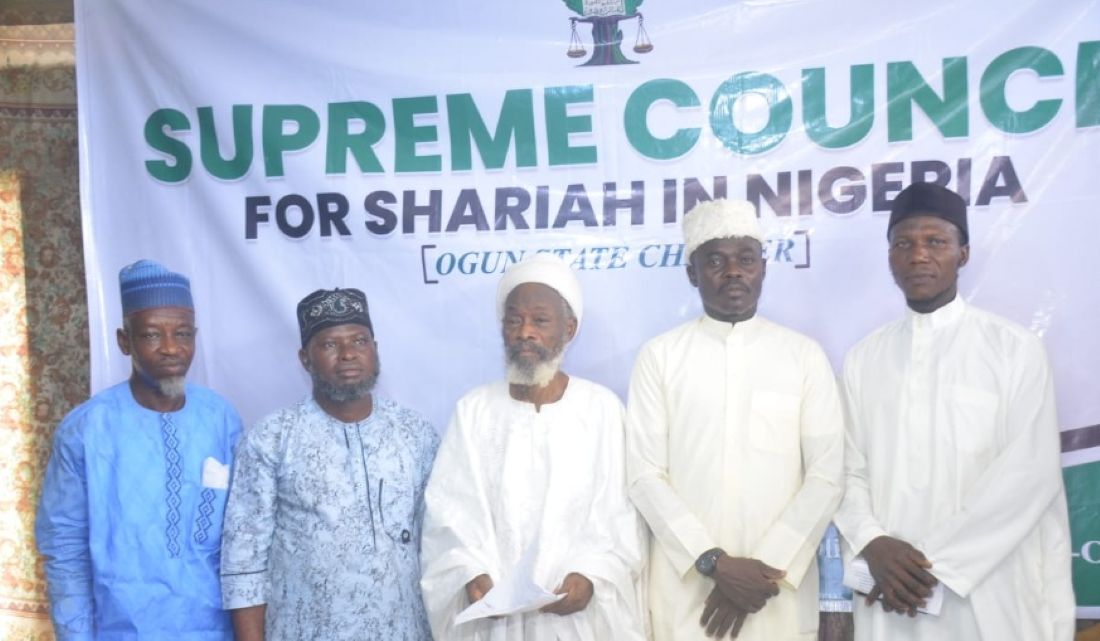
The 1999 Constitution of the Federal Republic of Nigeria forbids any state from adopting a religion. Twelve northern governors did it anyway, and Abuja looked away.
Nigeria is not an Islamic republic. Nigeria has 36 states, plus the Federal Capital Territory (Abuja). On paper, it is a federal presidential republic whose 1999 Constitution is explicit.
Section 10: “The Government of the Federation or of a State shall not adopt any religion as State Religion.”
Section 1(3): the Constitution is supreme. Any law inconsistent with it is void.
Section 38: every person has freedom of thought, conscience, and religion, including the right to change religion and to practice it in public.
Section 42: no citizen may be discriminated against on the ground of religion.
That is the legal architecture of the Fourth Republic. It is also the architecture that twelve northern states have spent a quarter-century hollowing out, not by rewriting the Constitution, but by standing up a parallel legal and moral order and daring Abuja to stop them. Abuja never did. That abdication is how you get a federation in which Christians can be attacked in their villages with little fear of consequences.
What the Constitution actually allowed, and what twelve states did
The Constitution does recognize Sharia courts. Sections 275 through 279 authorize states to create a Sharia Court of Appeal for questions of Islamic personal law: marriage, divorce, guardianship, inheritance, and waqf[1]. That is the colonial and post-independence bargain. Personal status for Muslims. Criminal law for everyone under written, generally applicable codes.
In 1999, Nigeria returned to civilian rule. Zamfara’s new governor, Ahmad Sani Yerima, campaigned on full Sharia. On January 27, 2000, his Sharia Penal Code took effect. It restored hudud-style criminal law: theft, adultery, fornication, alcohol offenses, blasphemy, flogging, amputation, and, on the books, stoning. He stood up a Hisbah (religious police), a Sharia Commission, and a Zakat board. Eleven other northern states followed by 2002:
- Zamfara
- Kano
- Sokoto
- Katsina
- Bauchi
- Borno
- Jigawa
- Kebbi
- Yobe
- Kaduna
- Niger
- Gombe
That is one-third of the federation. These codes apply, in theory, only to Muslims, or to non-Muslims who consent to Sharia jurisdiction. In practice, Hisbah units, censorship boards, school calendars, dress codes, alcohol bans, and public-morality campaigns do not stay inside the mosque. They set the public order of the state.
Critics, including Leo Igwe of the Humanist Association of Nigeria and several constitutional lawyers, have argued for years that extending a religious penal code through state statute is exactly what Section 10 forbids: the state adopting a religion. The Supreme Court has never issued a clean, nationwide holding that the 2000-era criminal codes are void. Lower courts have often treated Section 10 as non-justiciable or have upheld the codes as compatible with the Constitution because they formally bind only Muslims. That is how a republic dies: not in a coup, but in a footnote.
The first blood was over Sharia itself
Kaduna State is religiously mixed, nearly evenly split between Christians and Muslims. When its government moved to extend Sharia in February 2000, Christians marched. The protest was met with communal war. A judicial commission set up by the Kaduna state government put the official death toll at 1,295. Human Rights Watch estimated at least 2,000 killed across the February and May waves, with some independent estimates running as high as 5,000. Churches and mosques burned. Neighborhoods were ethnically and religiously cleansed. Many observers still call it the worst outbreak of communal violence in Nigeria since the civil war, and it was triggered by an attempt to impose a religious criminal order on a state that is not a Muslim monolith.
That was the warning. The federation absorbed it as the price of national unity. President Olusegun Obasanjo, a Christian, declined to test the codes in the Supreme Court. Subsequent presidents have done the same. The message to every northern governor, Hisbah commander, and street mob was simple: the center will not enforce Section 10.
How a dual legal order produces impunity
Let’s be precise about what is and is not happening. Sharia courts are not sitting in session sentencing Christian farmers to death for being Christian. The mass killings in Benue, Plateau, southern Kaduna, and parts of Niger are carried out by Fulani militants, bandit networks, Boko Haram, and ISWAP (Islamic State West Africa Province), not by qadis[2] with gavels. Anyone who blurs that distinction is either careless or arguing in bad faith.
But the twelve Sharia states and the killing fields in the Middle Belt are not unrelated stories. The connection is not that Sharia courts order the killings. It’s that the same twenty-five years in which Abuja let a third of the federation adopt a religious legal order are the twenty-five years in which Abuja also let religiously targeted violence go unpunished everywhere else. Both failures share one root: a federal government that will not enforce its own Constitution against organized religious power, whether that power wears a judge’s robe in Kano or carries a rifle in Benue. Four mechanisms show how that single failure of federal supremacy produces impunity on the ground.
The state stopped being religiously neutral in a third of the country. When a state funds Hisbah[3], pays ulama[4], closes schools for Ramadan (including Christian schools), polices dress and alcohol as Islamic public morality, and maintains blasphemy as a capital or corporal offense, it has adopted a religious public order. Christians in Kano or Katsina are not equal citizens of a secular federation; they are tolerated minorities in an Islamically marked jurisdiction. Hisbah has been documented pressuring converts and acting against people outside its legal mandate. In a May 2026 ruling, a federal high court restrained Kano State authorities and the Kano Hisbah from arresting or pursuing a 22-year-old woman (“Sarah” in court filings) over her conversion from Islam to Christianity and her refusal to enter a forced marriage and awarded her compensation for violations of her fundamental rights. You do not need a court order to protect a right that the local state respects.
Blasphemy law plus mobs is a license to kill. Federal and state blasphemy provisions survive alongside Sharia codes that treat insult to the Prophet as among the gravest crimes. Accusations, often fabricated, produce jungle justice. The Constitution’s speech and religion clauses lose to the street. When the formal system itself treats religious offense as existential, informal executioners do not expect to be punished. That culture does not stay inside the twelve states. It travels with identity and ideology into the Middle Belt.
Federal supremacy became optional. A republic that will not strike down state criminal codes that enact a religious legal system will also not insist that those same states treat attacks on Christian villages as an attack on the federation. Security forces arrive late. Commanders are rarely disciplined. Perpetrators of massacre after massacre are not identified, charged, or convicted. USCIRF[5] and multiple independent monitors have said the same thing for years: the government tolerates, under-investigates, or fails to pursue justice for religious violence carried out by non-state actors. That is the definition of impunity.
Two public moralities, one army. In the North-East, Boko Haram and ISWAP wage an explicit jihad. In the Middle Belt, armed Fulani groups have repeatedly attacked predominantly Christian farming communities, churches, and displacement camps, sometimes shouting religious slogans, often leaving villages emptied and land occupied. Independent monitors note that Muslims are also killed in large numbers by these same groups. Even so, Christian leaders have long argued that Nigeria’s security architecture responds more forcefully in the North-East than in the Middle Belt. Whether that reflects deliberate policy or simple institutional capture, the outcome is the same: attackers learn that some victims are safer to kill than others.
Sharia expansion did not invent farmer-herder conflict or desertification. It did something more important. It taught a generation that the Constitution is a document you negotiate around, that Islamic legal identity can be state policy, and that the federation will not choose its own supremacy when that choice offends the northern street. Once that lesson is learned, attacks on Christians in the next belt of states are not a constitutional crisis. They are a security problem to be managed, denied, or blamed on climate and cattle.
The official line, and why it is insufficient
Abuja’s line is consistent: Nigeria is multi-religious; Sharia binds only Muslims; violence hits Muslims too; the problem is banditry and poverty, not persecution. All of that contains a partial truth. Muslims do die in large numbers at the hands of the same terrorists and bandits. Sharia penal codes are written to apply to Muslims. The Constitution still exists, at least on paper.
Partial truth is how dual systems survive. A Christian convert in Kano does not experience “optional” personal law when Hisbah officers are pursuing her. A village in southern Kaduna or Benue that is burned while nearby security units stand down does not experience equal protection. A Hisbah that polices the public square is not a family court. And a Supreme Court that will not decide whether a state may run a religious criminal code is not enforcing the constitutional supremacy Section 1 guarantees.
In November 2025, President Trump designated Nigeria a Country of Particular Concern for religious-freedom violations, citing what he called the mass killing of Christians, and briefly threatened military action. The Tinubu government[6] rejected the designation, calling it inaccurate and unreflective of conditions on the ground, and pointed to attacks on Muslims as evidence the violence is indiscriminate rather than targeted persecution. Both things can be true at once: the killings are not exclusively anti-Christian, and the state has still built a legal order in twelve states that formally privileges one faith. Designations do not stop machetes. What would matter is the thing Nigeria has refused since 2000: treat Section 10 as law, confine Sharia courts to the personal-status jurisdiction the Constitution actually wrote, curb Hisbah authority over non-Muslims, repeal or neutralize blasphemy-as-capital-offense and prosecute the organizers of massacres as enemies of the republic rather than as an awkward rural dispute.
A republic cannot be half-supreme
You cannot have a federal constitutional republic in which twelve states operate a religious penal system, religious police, and a religious public morality, while the center pretends the founding charter is intact. That is not federalism. Federalism is states making different policy inside a shared constitution. This is a rival source of law and identity occupying the same map.
Christians in Nigeria have the rights the Constitution wrote. They do not have a state that will spend political capital to make those rights real in the North. The environment that lets villages be attacked with little fear of consequences was not created by a single decree. It was created by twenty-five years of looking away from the first and most obvious breach: a secular federation that allowed a bloc of states to reconstitute themselves on Sharia and called it democracy.
Until Abuja chooses the Constitution over the caliphate’s ghost, the funerals will continue, and the men who light the villages will keep counting on it.
A note on the “it’s not really about religion” crowd
Whenever this argument gets made, someone rushes in with the land-and-climate rebuttal, and it’s worth naming names instead of arguing with a strawman. Nnamdi Obasi, the International Crisis Group’s senior Nigeria adviser, has spent years pointing reporters toward desertification and shrinking grazing land as the real driver of Middle Belt violence, treating the religious framing as a distortion laid on top of an economic dispute. Nigeria’s own former vice president, Yemi Osinbajo, told a national livestock conference the herder-farmer clashes have no religious undertone at all. And Rev. Fr. Blaise Agwon of the Centre for Dialogue, Reconciliation and Peace in Jos has told interviewers the conflict is more about resources than religion.
Notice what all three have in common: none of them are the ones burying relatives. It’s a tidy explanation that lets a federal government off the hook and lets outside observers avoid saying the word “persecution” out loud. Land scarcity and climate stress are real and they matter. They do not explain why the killers so reliably burn the church first, why the codes on the books in twelve states apply criminal religious law to one faith and not the other, or why a “resource conflict” so consistently spares mosques. If this were purely about grazing rights, the violence would look nothing like it does on the ground. Calling it a land dispute is a way of not looking at the map this article just drew.
[1] Waqf is an Islamic philanthropic tradition that involves donating a property or assets to be held in trust and used for charitable or religious purposes.
[2] Qadi, in Islam, a judge who renders decisions according to the Shariah (Islamic law).
[3] Hisbah is the police force of the Islamic State in localized territory under the Islamic duty “Enjoining good and forbidding wrong” which is their slogan.
[4] Ulama are scholars of Islam who study and interpret the Quran, Sunnah, and Sharia.
[5] United States Commission on International Religious Freedom
[6] “The Tinubu government” refers to Nigeria’s current federal administration under President Bola Ahmed Tinubu


