Background
The SAVE Act would ensure that only U.S. citizens vote by turning the existing attestation of citizenship into a requirement for documentary proof before one can register or cast a ballot in federal elections – backed by stricter ID and administrative checks – rather than relying primarily on self-declaration.
Under current law, people registering to vote in federal elections must sign a document affirming they are U.S. citizens, but they generally do not have to submit paperwork proving it. The SAVE Act would amend federal law to require documentary evidence of U.S. citizenship (for example, a U.S. passport or birth certificate) at the time of voter registration for federal elections. Without this proof, a person could not be registered to vote in a federal contest.
Democrats are adamantly opposed to requiring proof of citizenship to vote in federal elections. But when it comes to voting in federal elections, the standard must be clear and unwavering: only United States citizens should decide the leadership and direction of the United States.
That principle isn’t extreme. It’s foundational.
Yet when bills like the SAVE Act require documentary proof of citizenship to register for federal elections, deceptive Democrats immediately frame the legislation as burdensome, restrictive, or even “voter suppression.” Let’s examine that claim honestly – and weigh it against something far more important: election integrity and public trust.
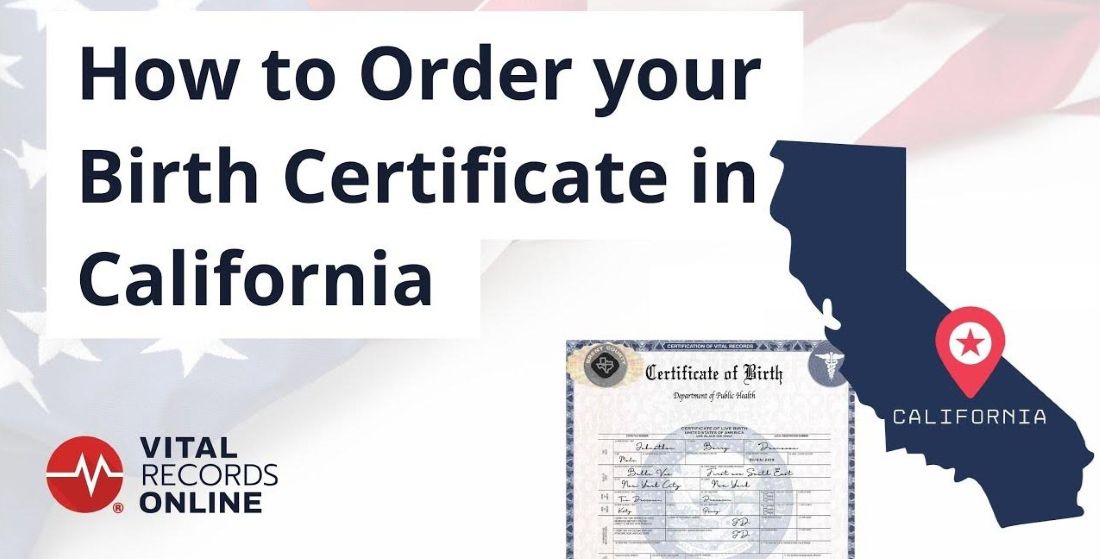
Is It Really That Hard to Get a Birth Certificate?
The central objection is that requiring proof of citizenship creates an unreasonable barrier for some Americans – particularly those who primarily vote for liberals. But what does that “barrier” look like in the real world?
For the overwhelming majority of Americans, obtaining a certified copy of a birth certificate is:
- Straightforward
- Inexpensive
- Routine
In most states:
- A certified copy costs between $10 and $30
- In-person requests are often fulfilled the same day
- Online or mail requests typically take 1–4 weeks
- Expedited options are available
County and state vital records offices handle these requests every single day. Millions of Americans obtain certified copies for passports, school enrollment, employment verification, Real ID compliance, Social Security matters, and countless other routine life events.
This is not an exotic or rare process. It is standard civic paperwork.
Yes, it may require filling out a form, presenting identification, and paying a modest fee. But those are ordinary responsibilities in a functioning society.
What About Name Changes for Women?
Another argument raised by opponents is that married women may face complications if their current last name differs from the one on their birth certificate.
But here again, the practical reality is clear: obtaining a certified copy of a marriage license (more accurately, a marriage certificate) is typically even easier than obtaining a birth certificate.
In most counties:
- Copies cost $5 to $20
- Many offices provide certified copies while you wait
- Online requests are processed in 1–3 weeks
Marriage records are kept at the county level and are routinely requested for insurance, taxes, Social Security updates, passports, and legal matters. Women across America already obtain these documents when needed. Doing so to protect the integrity of federal elections is hardly an unreasonable burden.
The Real Issue: Confidence in Our Elections
Here’s the question that matters:
Is a modest paperwork requirement too high a price to pay for restoring confidence in American elections?
Poll after poll shows that a significant percentage of Americans – across party lines – harbor doubts about election integrity. Whether those doubts are justified or not, they exist. And in a republic, perception matters. If citizens do not trust the process, they will not trust the outcome.
Democrats argue that non-citizen voting is already illegal. That is true. But laws without verification mechanisms are not safeguards – they are assumptions.
We require identification to:
- Board an airplane
- Purchase alcohol
- Enter federal buildings
- Open a bank account
- Obtain government benefits
Yet we’re told that verifying citizenship for the act that determines national leadership is somehow excessive.
That argument simply does not hold up.
Inconvenience vs. Integrity
Let’s be honest: obtaining documentation may involve:
- A small fee
- A trip to a county office
- Waiting a few weeks by mail
But these minor inconveniences pale in comparison to the importance of ensuring that only eligible citizens vote in federal elections.
We ask Americans to:
- Register for selective service
- Serve on juries
- Pay taxes
- Follow countless regulations
Civic responsibility has always involved effort.
If securing the legitimacy of our elections requires citizens to obtain the same documentation they already use for passports, employment verification, or Real ID compliance, that is not oppression – it is common sense.
The Bigger Picture
The debate over proof of citizenship is not about paperwork. It is about trust.
A system that verifies eligibility strengthens:
- Public confidence
- Bipartisan legitimacy
- Peaceful acceptance of results
- National unity after elections
When citizens believe the process is secure, they are more likely to accept outcomes – even when their preferred candidate loses. That stability is worth far more than the modest cost or time required to obtain a certified document.
A Republic Worth Protecting
America is a nation of laws. Citizenship matters. Voting is sacred. And protecting the integrity of federal elections should not be controversial. Requiring documentary proof of citizenship to register to vote in federal elections is not radical. It is prudent. It is responsible. And most importantly, it affirms a basic principle:
The future of the United States should be decided by the citizens of the United States.
If securing that principle requires a certified birth certificate and, where applicable, a marriage license, that is a small step for any individual – and a giant leap toward restoring faith in American democracy.
As an American, I will be happy to reregister to vote – this time providing proof of my citizenship. I will be glad to do my part to help restore voter confidence in our elections. I consider it my civic duty.