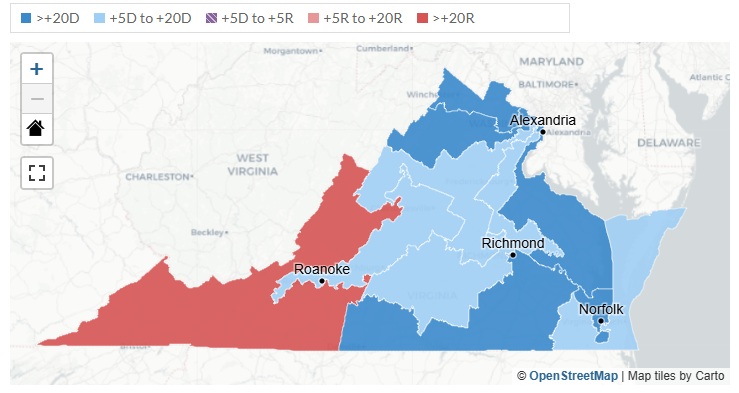
Virginia voters delivered a decisive verdict on April 21, 2026, approving a constitutional amendment that temporarily hands the Democrat-controlled General Assembly the power to redraw the state’s congressional districts. The measure passed narrowly (51.45% to 48.55%), greenlighting a new map already drafted by Democratic legislators and signed by Governor Abigail Spanberger. This mid-decade redraw—framed by Democrats as a response to Republican gerrymandering in states like Texas—fundamentally alters Virginia’s 11-district delegation heading into the November 2026 midterms. It could hand Democrats a net gain of up to four House seats in the Commonwealth alone.
With Republicans clinging to a razor-thin majority in the House (approximately 217-213 with a few vacancies as of April 2026), this shift has immediate national implications. Democrats need only a small net gain—roughly three to five seats, depending on final vacancies—to seize control of the chamber. Virginia’s move could single-handedly provide most or all of that margin. The Senate map, by contrast, remains far less affected by district lines and tilts more favorably toward Republicans.
The House: Virginia’s Gerrymander Tilts the National Battlefield
Virginia’s current congressional map, drawn by a bipartisan commission after the 2020 census, produced a relatively balanced 6 Democratic–5 Republican delegation in recent cycles. The new map dramatically consolidates Republican strength into a single heavily GOP district anchored in Southwest Virginia (likely the 9th District, rated Safe Republican by forecasters like Sabato’s Crystal Ball). Democratic voters from fast-growing Northern Virginia are “spread thin” across multiple new districts with tendrils reaching into suburban and rural areas, creating 10 districts that lean Democratic based on recent statewide election data (gubernatorial and presidential results).
Analysts project this could flip as many as four Republican-held seats into Democratic-leaning territory. Two previously Republican districts become more competitive or Democratic leaning, while Democratic strongholds are reinforced. Even the toss-up districts under the new map (such as the reconfigured 2nd in the Hampton Roads/Virginia Beach area) tilt toward Democrats in a neutral or favorable national environment.
This isn’t just a Virginia story. It directly counters Republican gains from mid-decade redistricting in other states (Texas, North Carolina, Ohio, and Missouri), where GOP legislatures drew maps to protect or expand their advantages. Virginia’s move restores some balance to the national redistricting wars and dramatically shrinks the number of true battleground districts Democrats must defend or target elsewhere.
Critical House Districts to Watch Nationally (Beyond Virginia):
Democrats’ path to the majority now runs through a smaller set of competitive seats, many in suburban battlegrounds. Key toss-ups and leans as of April 2026 ratings (drawing from Cook Political Report and other forecasters) include:
- Arizona’s 1st and 6th Districts: Open or narrowly held Republican seats in suburban Phoenix. These are perennial battlegrounds with high independent turnout.
- New York’s 17th (Rep. Mike Lawler, R): One of the most watched toss-ups; a Biden/Harris-won district where the GOP incumbent has survived narrow races. Democrats view this as a top flip opportunity.
- California’s 22nd and other Central Valley seats: Competitive districts where immigration, water rights, and cost of living dominate.
- Other high-profile targets: Seats in Pennsylvania, Colorado (8th), and scattered open or vulnerable Republican districts in the Midwest and Northeast. Several Democratic incumbents in Trump-won or close districts (e.g., certain New York and Maine seats) will also face pressure.
Overall, forecasters see roughly 30–40 truly competitive House races. Virginia’s four-seat swing means Democrats could capture the chamber even if they split the other battlegrounds evenly—especially if 2026 follows the historical midterm pattern of losses for the president’s party. A “blue wave” driven by turnout among college-educated suburban voters, frustration over federal policies, or economic headwinds would amplify Virginia’s impact. Conversely, if Republicans nationalize the election around border security, inflation, or cultural issues, they could limit the damage.
The Senate: Statewide Contests, Fewer Moving Parts
Senate races are statewide and thus untouched by congressional redistricting. The 2026 map is structurally challenging for Democrats. Republicans hold a 53–47 edge (with two independents caucusing with Democrats, giving the minority effective leverage on organization). Thirty-five seats are up, with Republicans defending 22 and Democrats (plus caucusing independents) defending 13.
To regain the majority, Democrats need a net gain of four seats—a tall order given the map. Key battlegrounds include:
- Democratic vulnerabilities (GOP targets): Georgia (Sen. Jon Ossoff, D) and Michigan (open seat after Sen. Gary Peters retires). Both are in states Trump carried or came close to carrying in 2024. Ossoff’s narrow 2020 win makes him a prime pickup target.
- Republican vulnerabilities (Democratic targets): Maine (Sen. Susan Collins, R), a state that leans Democratic at the presidential level; North Carolina (open seat after Sen. Thom Tillis retires); and potentially Ohio or Alaska under the right conditions.
- Other watches: Florida (special election dynamics), Iowa, and Texas could become competitive only in a massive Democratic wave.
Forecasters rate only a handful of races as true toss-ups or leans early in the cycle. Republicans are favored to hold or expand their majority unless Democrats overperform significantly in suburban and swing-state turnout. Virginia’s House-focused redistricting has no direct spillover here, though a strong Democratic performance in the Commonwealth could signal broader momentum.
Bottom Line: Virginia Just Made House Control More Attainable for Democrats
Yesterday’s referendum was a tactical win for Democrats in the redistricting arms race. By turning Virginia from a 6–5 split into a potential 10–1 blowout, it compresses the national House map and gives Democrats a structural edge in their bid to reclaim the Speaker’s gavel. The Senate remains a steeper climb, with the map and math still favoring the GOP.
For voters, candidates, and donors, the 2026 midterms just got simpler in one key respect: Virginia’s new lines mean the House majority could be decided largely by how well Democrats defend their new gains while pressuring a short list of Republican-held suburban seats elsewhere. The balance of power in Washington for the next two years hangs on these battlegrounds—and Virginia just tilted the scales.