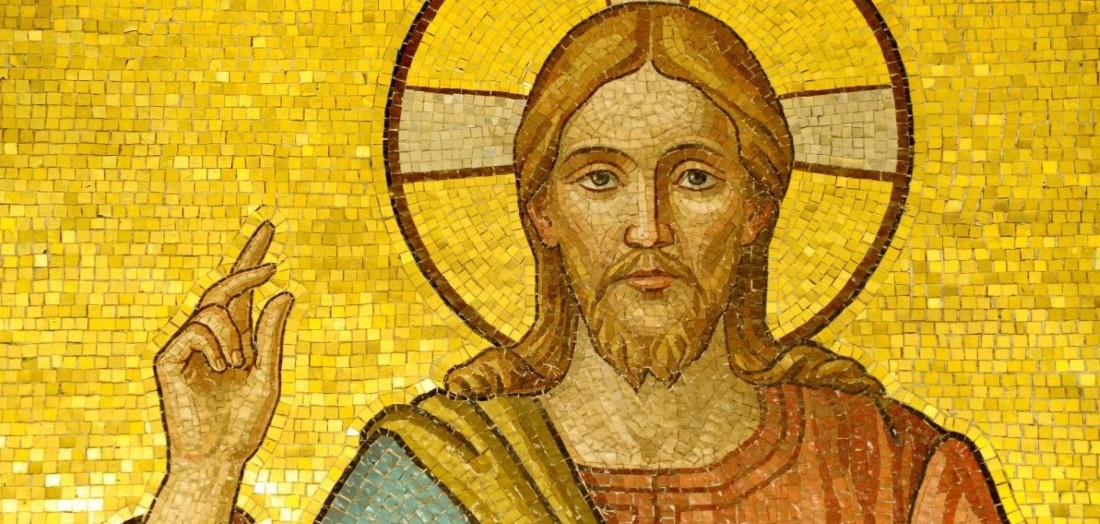
The probability that Jesus of Nazareth is the prophesied Messiah, when evaluated through the lens of Old Testament prophecies and probability mathematics, is extraordinarily high – approaching certainty under the assumptions of divine prediction and accurate fulfillment. This conclusion arises from classic statistical analysis that renders random chance fulfillment effectively impossible.
The Foundation: Hundreds of Messianic Prophecies in the Old Testament
Scholars have long identified a substantial number of Old Testament passages that point to or describe the coming Messiah. Estimates vary depending on whether one counts direct predictions, typological references, or repeated themes:
- J. Barton Payne identified up to 574 verses in the Old Testament that reference or describe the Messiah.
- Alfred Edersheim noted 456 verses referring to the Messiah or His times.
- Conservative counts of direct prophecies fulfilled by Jesus range from at least 300 to 351 or more (e.g., lists compiling specific fulfillments often cite 351 or 353).
These prophecies span details of the Messiah’s birth, lineage, ministry, death, resurrection, and more – written centuries before Jesus’ time!
Peter Stoner’s Pioneering Probability Calculations
The most famous application of mathematics to this question comes from Peter W. Stoner, a former chairman of the mathematics and astronomy departments at Pasadena City College (and later at Westmont College). In his 1958 book Science Speaks, Stoner examined the improbability of one person fulfilling even a small subset of these prophecies by mere chance.
Stoner focused on 8 specific, clear messianic prophecies (selected for their specificity and independence), using conservative estimates derived from historical and cultural data (often with input from over 600 students across 12 classes):
- Born in Bethlehem (Micah 5:2) – estimated at 1 in 280,000.
- Preceded by a forerunner (Malachi 3:1) – 1 in 1,000.
- Entering Jerusalem on a donkey (Zechariah 9:9) – 1 in 10,000.
- Betrayed by a friend (Zechariah 13:6; Psalm 41:9) – 1 in 1,000.
- Betrayed for 30 pieces of silver (Zechariah 11:12) – 1 in 10,000.
- The silver used to buy a potter’s field (Zechariah 11:13) – 1 in 100,000.
- Silent before accusers (Isaiah 53:7) – 1 in 1,000.
- Hands and feet pierced (Psalm 22:16, implying crucifixion) – 1 in 10,000.
Using the compound probability rule for independent events (multiply individual probabilities), the combined odds for one person fulfilling all eight came to 1 in 10¹⁷ (1 in 100 quadrillion). Stoner illustrated this dramatically: Imagine covering Texas two feet deep in silver dollars, marking one, mixing them, and having a blindfolded person pick the exact marked coin on the first try.
Extending the analysis to 48 prophecies (a modest subset), Stoner applied even more conservative estimates, yielding 1 in 10¹⁵⁷ – a number vastly exceeding the estimated 10⁸⁰ atoms in the observable universe. Chance fulfillment becomes physically impossible at this scale.
Scaling to Hundreds of Prophecies
With scholars documenting 300+ fulfillments by Jesus (and up to 574 verses pointing to the Messiah), the improbability escalates exponentially. Even assuming far more generous individual probabilities (e.g., 1 in 1,000 per additional prophecy), the joint probability for hundreds becomes an incomprehensible figure like 10 to a power in the hundreds or thousands – far beyond any rational expectation of coincidence.
Within this framework, the probability of random chance explaining the fulfillments is effectively zero. Thus, the likelihood that Jesus of Nazareth is the Messiah – assuming the prophecies are genuine predictions, and the New Testament accounts are reliable – is essentially 1 (or 100% for all practical purposes). This is the core conclusion drawn in apologetics works citing Stoner, such as those by Josh McDowell and Lee Strobel.
Important Caveats and Considerations
While powerful, these calculations rest on key assumptions:
- Independence – Prophecies are treated as statistically independent. Some correlations exist (e.g., betrayal details overlapping), which could slightly adjust the odds – but not enough to alter the overall conclusion meaningfully.
- Subjective estimates – Individual probabilities are reasoned approximations, not empirical data, though Stoner used conservative (chance-favoring) values.
- Interpretive debates – Not every passage is universally seen as a direct messianic prophecy. Some are typological, poetic, or originally about contemporary events / figures (e.g., Isaiah 7:14 or the Suffering Servant in Isaiah 53). Skeptics argue some fulfillments involve deliberate alignment or reinterpretation, and Jewish tradition often views the Messiah differently (e.g., no dying Messiah). These perspectives would increase individual probabilities and reduce joint improbability.
Critics also note that the calculations are most compelling within a Christian interpretive framework and do not constitute universal “proof,” as prophecy interpretation involves theology, history, and linguistics.
Conclusion: Beyond Chance to Divine Orchestration
Faced with the staggering odds against any alternative explanation and the remarkable consistency with which the prophecies are fulfilled, it becomes evident that Jesus of Nazareth uniquely fulfills the messianic expectations described in Scripture. The combined weight of historical records, scholarly examination, and theological reflection highlights a level of divine orchestration that transcends the realm of chance.
The odds of Jesus not being the promised Messiah are vanishingly small – far beyond what chance could ever explain, according to rigorous probability calculations on hundreds of Old Testament prophecies. If you’ve held objections or doubts for years, perhaps rooted in pride or past hurts, I pray you’ll lay them down for a moment. Open your heart to the genuine possibility that the evidence points to Him after all… and that grace is still waiting.
“Above all, you must understand that no prophecy of Scripture came about by the prophet’s own interpretation of things. For prophecy never had its origin in the human will, but prophets, though human, spoke from God as they were carried along by the Holy Spirit.” – 2 Peter 1:20-21
Jesus answered, “I am the way and the truth and the life. No one comes to the Father except through me.” – John 14:6