In the main cases tied to pandemic-era fraud, housing assistance, and autism services, the U.S. Attorney’s Office for Minnesota has said that more than 90% of the people charged are of Somali descent. That includes about 72 of 78 Feeding Our Future defendants, and similar proportions in other Somali American fraud related schemes. The United States took in Somali war refugees beginning in the early 1990s and through the mid-2000s only to now discover some of these refugees or their descendants have been stealing billions of dollars from the government and sending a large portion of the money back to Somalia.
Minnesota has become the center of one of the largest pandemic-era fraud scandals in U.S. history, raising serious questions about fraud, government oversight, political accountability, and the stewardship of taxpayer dollars. Under Democratic Governor Tim Walz, federal and state programs intended to serve children, families, and vulnerable populations were exploited on a massive scale, with losses now estimated by federal authorities to exceed $1 billion. Some estimate the losses could be as high as $9 billion.
At the heart of the scandal is the abuse of pandemic-relief and social service programs that operated with relaxed rules and limited verification. Federal prosecutors have described Minnesota as unusually vulnerable to fraud during this period, with criminal networks taking advantage of weak controls, delayed state intervention, and a lack of enforcement urgency.
Feeding Our Future: The Core Case
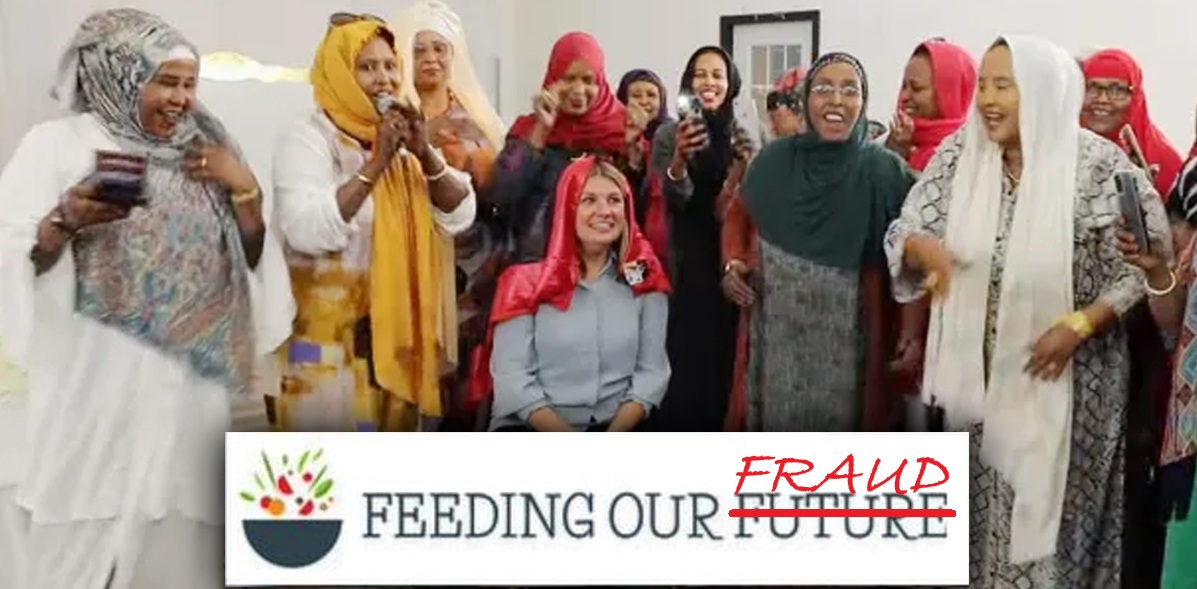
The most prominent case involves the nonprofit Feeding Our Future, which administered federal child nutrition funds during COVID-19. Prosecutors allege the organization oversaw a vast scheme involving fake meal sites, inflated reimbursement claims, shell companies, and falsified documentation. According to court records, defendants claimed reimbursement for tens of millions of meals that were never served.
As of late 2025:
- 78 individuals have been federally charged
- More than 50 have pleaded guilty
- Additional defendants have been convicted at trial, including the organization’s founder, Aimee Bock
The Feeding Our Future case alone is estimated to have cost taxpayers $250 – 300 million.
While many of those charged are Somali American residents of the Twin Cities area, federal prosecutors have been clear that the case involves criminal networks within the Somali community, and not the entire community. Many Somali Americans in Minnesota are law-abiding citizens who contribute positively to the state and have publicly condemned the fraud. Minnesota has the largest Somali American population in the United States. It’s now estimated that 61,000 to 107,000 Somali Americans live in the state.
Broader Program Abuse
The Feeding Our Future scandal is not isolated. Federal and state investigators are examining fraud across at least 14 Minnesota-administered programs, including:
- Autism services, where providers billed for therapy that was never delivered, sometimes using unqualified staff. One case involved approximately $14 million in fraudulent claims.
- Housing stabilization and disability services, where shell companies allegedly billed hundreds of millions for services that were never provided.
- Transportation and childcare subsidies, some tied to nonexistent clients, duplicate addresses, or facilities that appeared inactive during operating hours.
Federal officials estimate that fraud losses across these programs is $1 billion to $9 billion, a staggering figure given that Minnesota has received roughly $18 billion in federal funding since 2018.
Investigators have also documented money laundering through real estate purchases and overseas transfers, further underscoring the sophistication and scale of the schemes.
A Failure of Oversight and Leadership
Warning signs emerged years before the pandemic. State agencies flagged concerns as early as 2019, but enforcement actions were slow, fragmented, or deferred. When federal pandemic rules loosened verification requirements, opportunities for fraud expanded rapidly.
Critics argue the Walz administration failed to act decisively, prioritizing political risk management over aggressive enforcement of this widespread Somali American fraud. Whistleblowers and inspectors have testified that agencies were reluctant to intervene amid concerns about accusations of discrimination or political backlash.
The result was a prolonged window in which fraud flourished unchecked.
Accountability Without Prejudice
This scandal has harmed Minnesota’s Somali American community by associating lawful immigrants with criminal activity committed by a relatively small number of offenders. Community leaders have publicly denounced the fraud and expressed concern over reputational damage, increased scrutiny, and stricter enforcement measures that affect innocent families. At the same time, accountability must be applied evenly and without hesitation. Criminal conduct – regardless of race, ethnicity, or political sensitivity – demands enforcement.
Lessons and Policy Solutions
Minnesota’s experience highlights longstanding conservative concerns about liberal, rapid government expansion without adequate safeguards. Effective solutions include:
- Comprehensive audits and recovery efforts to reclaim stolen funds
- Stricter verification and real-time monitoring for all public benefit programs
- Clear accountability for state leadership when oversight failures occur
- An end to politically driven enforcement paralysis
- Uniform application of the rule of law, without fear or favoritism
This is not merely a Minnesota issue. It is a national warning about what happens when government grows faster than its ability – or willingness – to enforce basic controls.
Taxpayers deserve competence, transparency, and accountability. When those principles fail, trust erodes, resources are wasted, and the people most in need are the ones who ultimately suffer.
HELPFUL HINT – If daycare centers and health clinics in your city have all the windows covered with paper so nobody can see inside, and they have received state and federal funding, consider the concealment as a cue to take a closer look.